

Fishing in Espíritu Santo Bay
Espíritu Santo Bay Lodge offers access to one of the Caribbean’s most diverse and lightly pressured saltwater fisheries. Located deep within Mexico’s protected Sian Ka’an Biosphere Reserve — a 1.3-million-acre UNESCO World Heritage Site — the fishery remains remarkably pristine thanks to strict conservation measures and limited development throughout the bay.
The diversity of habitats found across Bahía Espíritu Santo creates ideal conditions for permit, bonefish, tarpon, and snook to thrive within the same interconnected system. White sand flats, turtle grass lagoons, deep tidal channels, mangrove shorelines, and remote backcountry estuaries all combine to produce a fishery where anglers regularly encounter multiple species throughout a single day — and often on the same flat.
What truly sets ESB apart is its opportunistic style of fishing. Rather than running long distances to target a single species, anglers remain prepared for whatever opportunities the day presents. A morning may begin targeting tailing permit before shifting to resident tarpon along mangroves or schools of bonefish pushing across flooded flats as the tides change. Every skiff is fully rigged with rods prepared for all primary species, allowing guides and anglers to adapt instantly throughout the day.
Target species of the bay
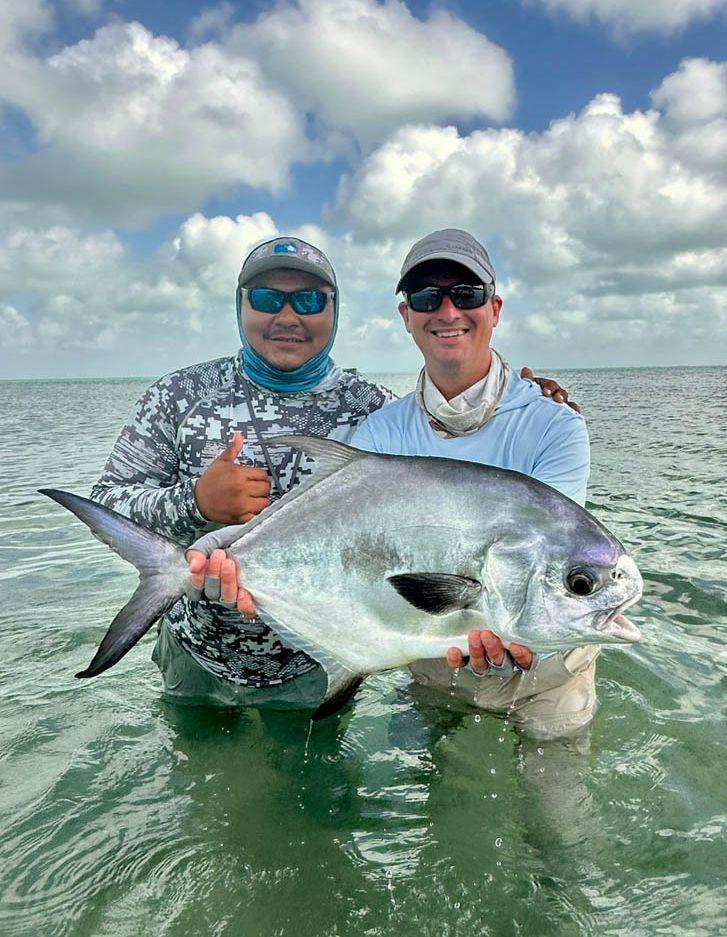
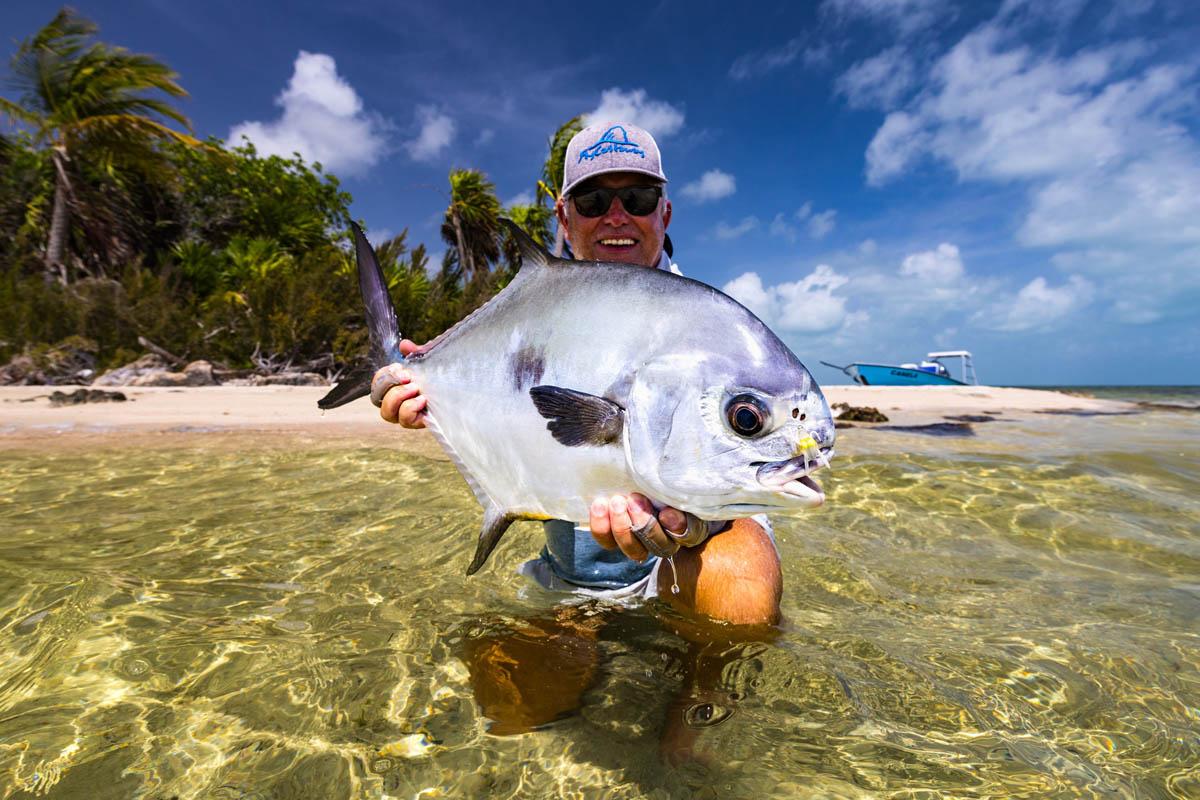
Permit are the defining species of Bahía Espíritu Santo and the foundation of ESB’s global reputation. Widely considered one of the finest permit fisheries in the world, the bay consistently produces extraordinary numbers of encounters with fish of all sizes and behaviors.
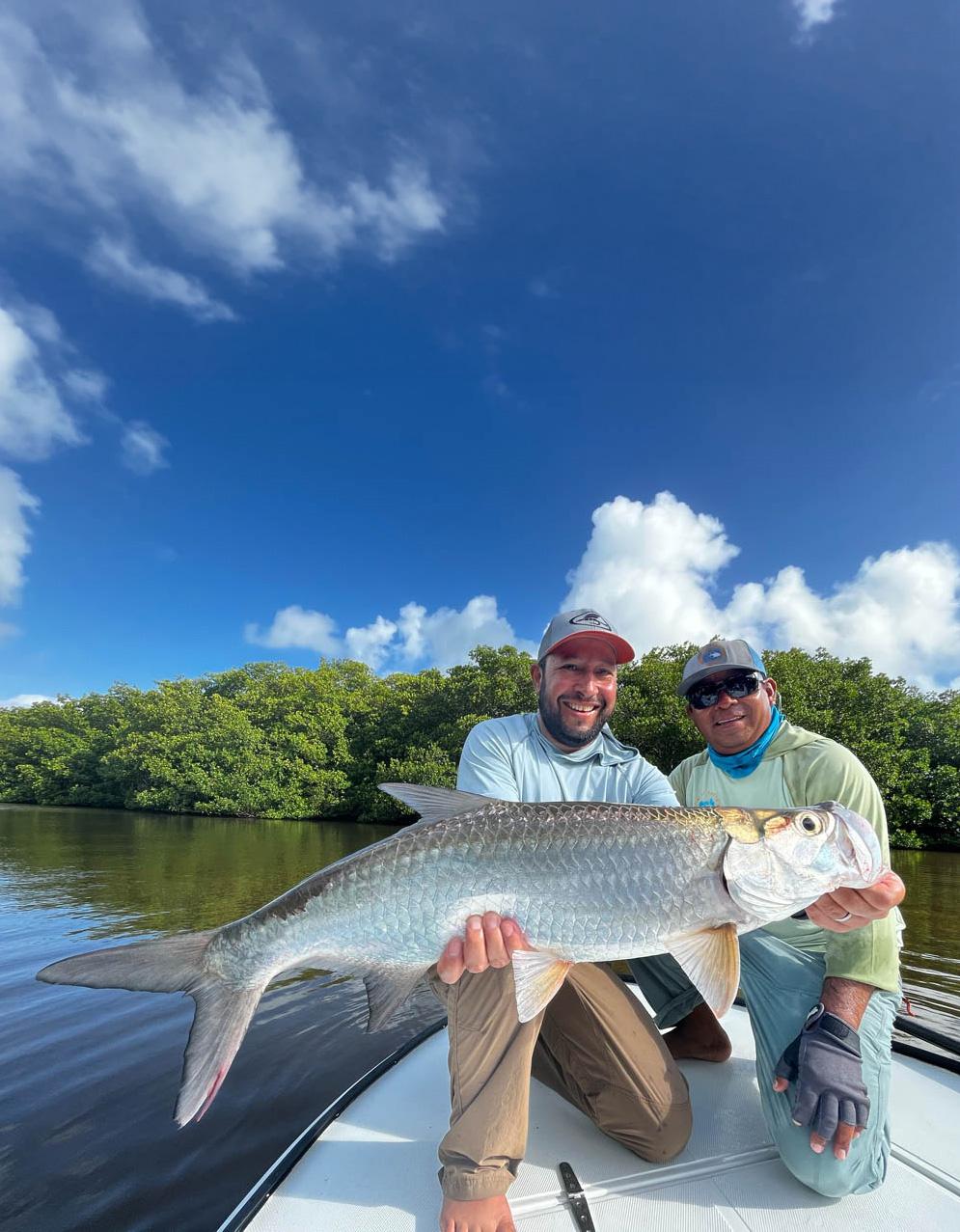
Anglers target permit across a wide range of scenarios, from shallow tailing singles on white sand flats to large schools moving through deeper channels and turtle grass edges. Most fishing is done from technical shallow-water skiffs, though anglers occasionally stalk tailing fish on foot when conditions allow.The mangrove-lined shorelines and estuaries throughout the northern bay hold healthy populations of resident tarpon ranging from 5 to 20 pounds. These fish provide exciting sightfishing opportunities with lighter tackle, particularly along mangrove edges during falling tides. Resident tarpon are commonly targeted with baitfish patterns and topwater flies, producing aggressive eats in shallow water throughout the season.
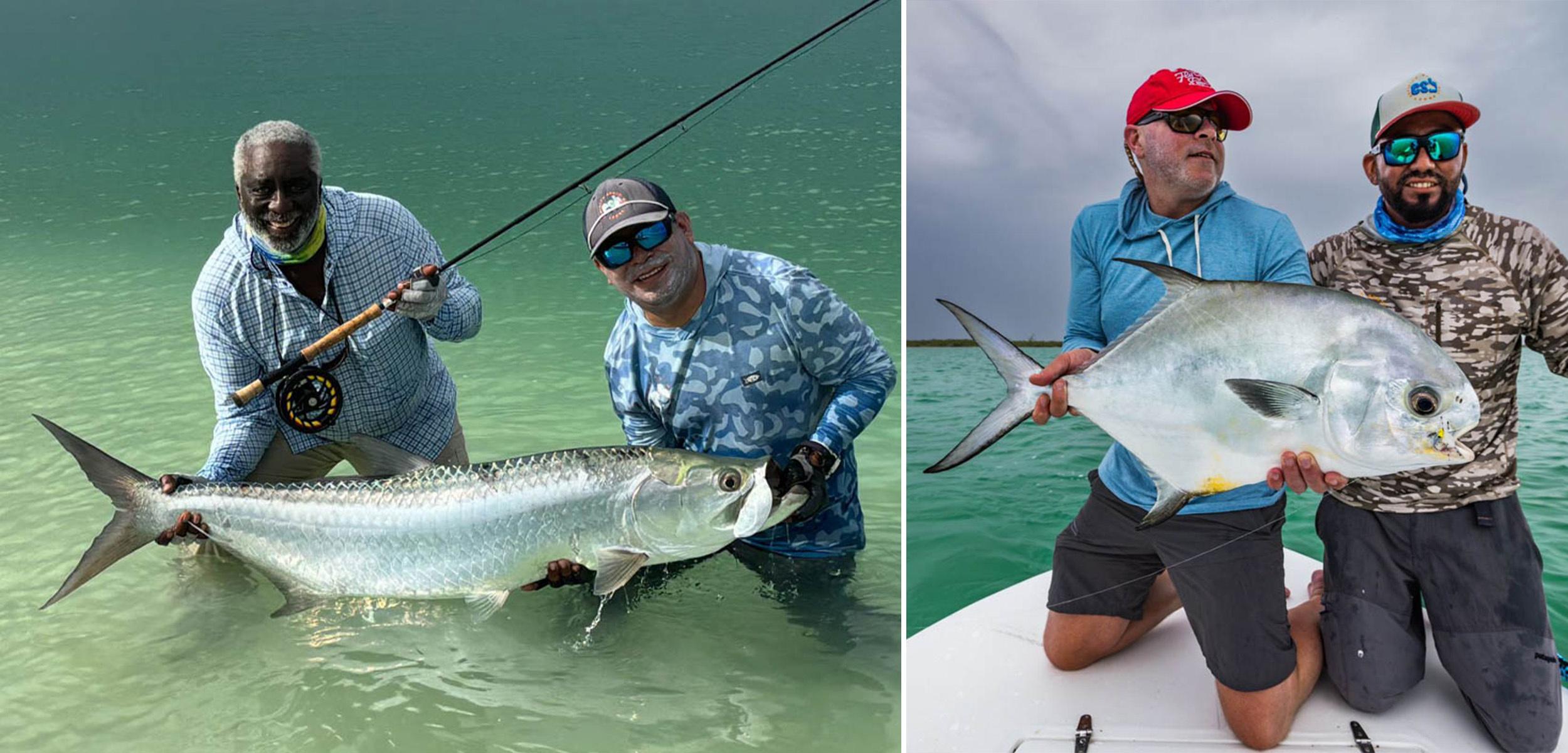
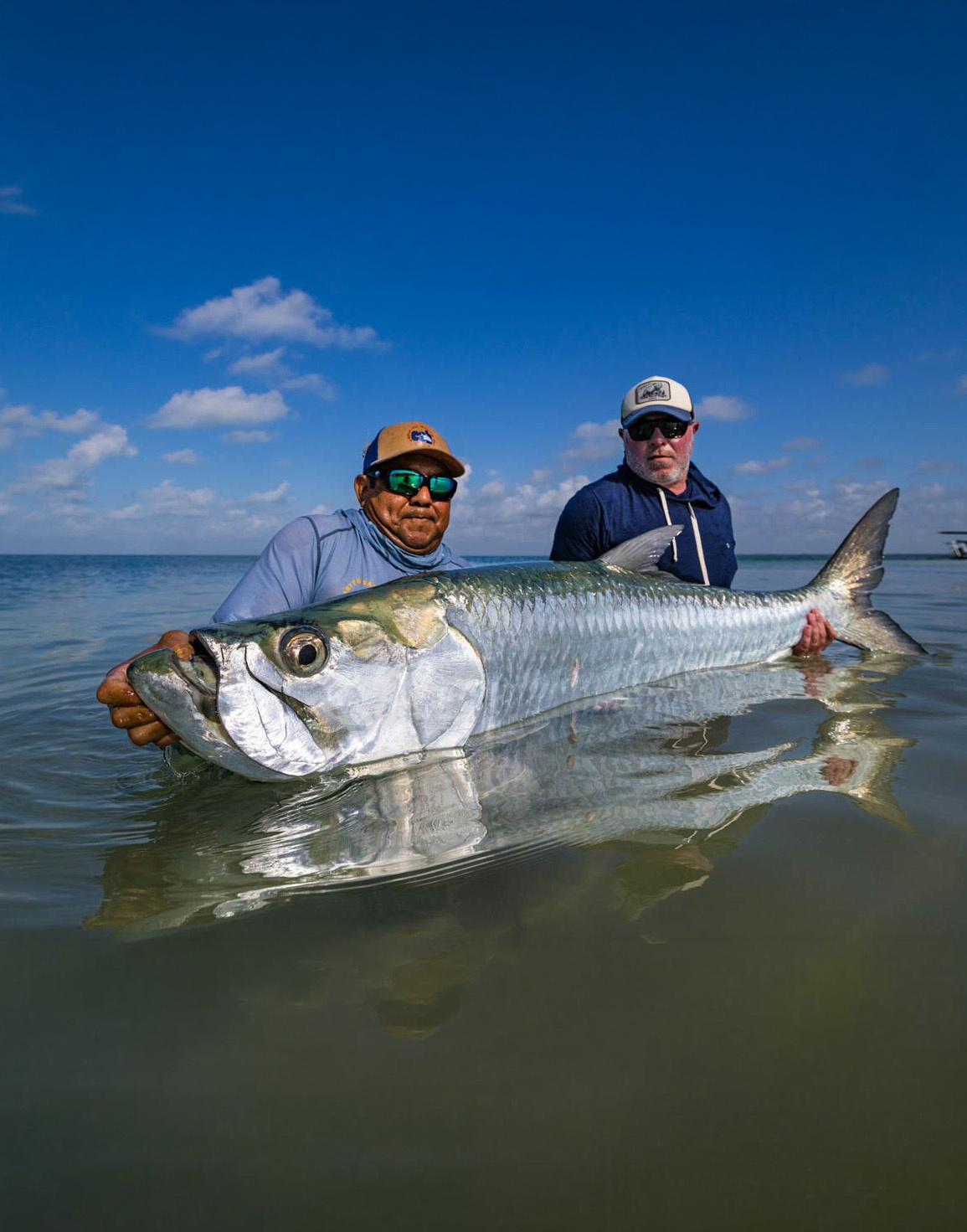
For nearly five months each year, large migratory tarpon move through Bahía Espíritu Santo following enormous schools of baitfish. These fish typically range from 80 to 150 pounds and provide true sight-casting opportunities in relatively shallow water.
Fishing is focused around deep channels and moving tides near the mouth of the bay, where tarpon stage and feed aggressively. Using 11 and 12-weight rods, anglers target rolling and cruising fish with large baitfish patterns and accurate presentations.ESB offers some of the best snook fishing in the Caribbean thanks to healthy mangrove habitat and minimal fishing pressure. Snook are commonly targeted along mangrove shorelines and creek mouths where they coexist closely with resident tarpon. During the fall months, larger migratory fish enter the system, giving anglers legitimate opportunities at trophy snook exceeding 20 pounds.
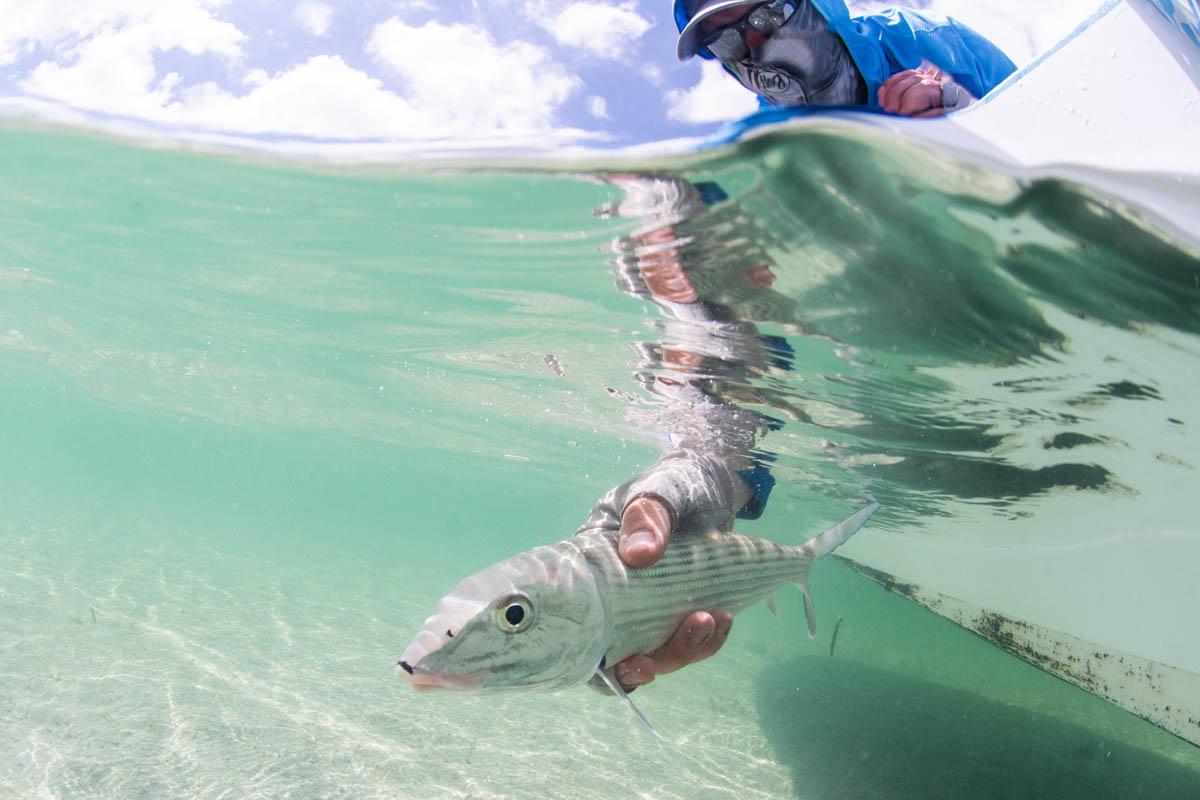
Bonefish are found throughout nearly every corner of the bay, from flooded turtle grass flats to shallow white sand shorelines. Average fish range around three pounds, though larger fish over five pounds are landed each season. The fishery is ideal for anglers who enjoy technical shallowwater sight fishing with lighter tackle, particularly during higher tides when tailing fish flood the flats.
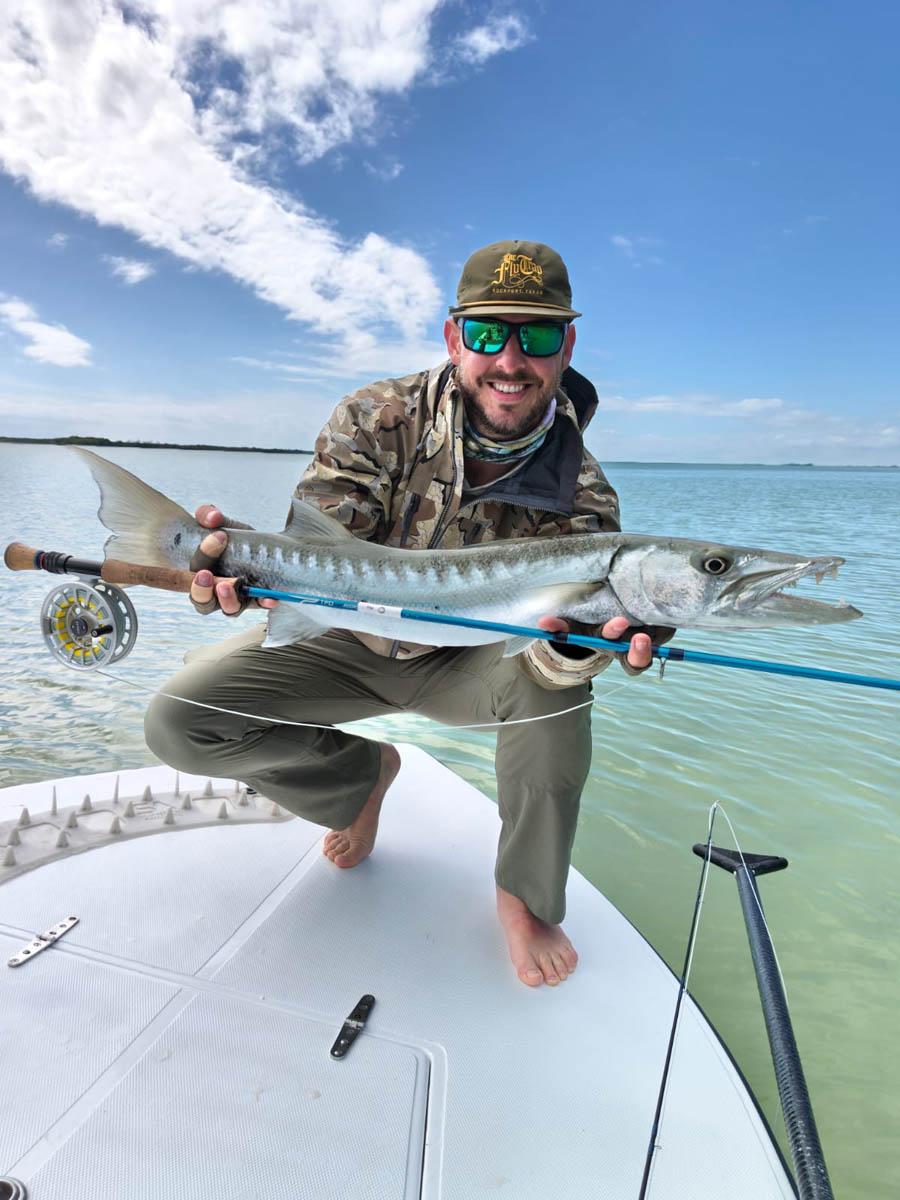
Barracuda are among the most exciting and underrated species encountered throughout ESB. These aggressive predators patrol white sand flats, river mouths, and backcountry lagoons, often appearing unexpectedly while targeting permit or bonefish. Large jacks are also frequently encountered throughout the bay, offering blistering runs and powerful fights on fly tackle.
Daily Itinerary
The typical trip does not include guided fishing on arrival or departure days, allowing guests time to settle into the lodge, organize tackle, and enjoy the relaxed atmosphere of the Caribbean coast. Fishing days at ESB are full and flexible, built around tides, weather conditions, and the species anglers wish to pursue.
6:00 AM – Coffee available in the main lodge.
6:30 AM – Breakfast served.
7:30 AM – Depart lodge for the fishing grounds.
8:00 AM – Meet guides and begin fishing.
12:00 – 1:00 PM – Lunch taken on the water in a shaded area of the bay.
5:30 – 6:00 PM – Return to the lodge for cocktails and appetizers.
7:00 PM – Dinner served
Fishing Equipment
Essential Gear for the Bay
ESB lodge provides anglers with high-quality loaner fly fishing equipment
Rods
- 7 wt. 9-foot (for bonefish)
- 9wt. 9-foot (for permit): 2 rods set-ups
- 10wt. 9-foot (for baby tarpon and snook)
- 11wt. 9-foot (for migratory tarpon)
Reels & Lines
Saltwater fly reels with adjustable drag systems and capacity for at least 150 yards of 30 lb backing
- 7wt. tropical weight-forward Bonefish line
- 9wt. tropical weight-forward Permit line – 2 different set-ups for Permit, both with floating lines rigged with different crab-patterns.
- 10wt. tropical weight-forward Tarpon line (for Baby Tarpon & Snook)
- 11wt. tropical weight-forward Tarpon line (for migratory Tarpon)
Leaders
For Permit
- Leader Recommendations: 10’ – 12-20lb Fluorocarbon (mostly 16lb)
- Tippet Recommendations: (1 Spool of Each – Fluorocarbon) – 12lb, 16lb
We recommend 10–12 ft tapered leaders with a 16 lb test for most fishing situations. Depending on conditions, you may use heavier leaders (17–20 lb) or need to downsize to 12 lb. Be sure to bring a selection of leaders and additional tippet material. We recommend fluorocarbon tippet for its superior abrasion resistance.
For Bonefish
- Leader Recommendations: 9’ or 10’ – 8.8 and 10lb
- Tippet Recommendations: (1 Spool of Each – Fluorocarbon) – 8 lb, 10 lb, 12 lb
Bonefish in the bay typically average 2–3 lbs and can be leader-shy at times. We recommend 9–10 ft tapered leaders with an 8 lb test for most situations, although 10–12 lb leaders and tippet can also be effective. Be sure to bring a selection of leader strengths and additional tippet material. Fluorocarbon tippet is recommended for its superior abrasion resistance.
For Tarpon
Straight Fluorocarbon Recommendations
- Juvenile “Baby” Tarpon: 40-50 lb Straight Fluoro
- Adults(May -September): 80lb Straight Fluorocarbon
Class Leader Recommendations
- Juvenile “Baby” Tarpon: 16lb Class – 40-60lb Shock
- Adults (May – September) 16-22 lb Class – 80 lb Shock
For Snook
Snooks are generally not very leader shy and you should be able to present your typical baby-tarpon fly rigged with 40 or 50 lb successfully without having to change flies or leader.
For Barracudas & Sharks
Barracuda readily strike long needlefish and baitfish patterns retrieved at high speeds. Flies with tandem or trailer hooks are recommended to improve hook-up rates. Both barracuda and lemon sharks will also take poppers. We recommend a 4–5 ft straight monofilament leader with a 30-inch wire bite tippet of at least 35–40 lb test.
Flies
For Permit
Permit’s primary food source in Espíritu Santo Bay mainly consists of small crabs and spawning or mantis shrimp. The choice of crab and shrimp patterns, varying in sizes and weights (such as lead eye and bead chain eyes), depends on the fishing location and the depths being explored. A diverse array of flies becomes crucial to match the right pattern, accounting for distinct bottom structures, water depths, and fish behaviors. Among the essential flies for permit, variations of tan and white ragheads, typically in size #2 or #4, top the list. Equally significant are patterns imitating spawning and mantis shrimp. Notably, Enrico Puglisi’s range offers the finest Spawning Shrimp patterns, available in diverse styles, colors, sizes, and with different eye types (bead chain and lead).
- Sargassum Floating Crab | COLOR: Tan, White | SIZE: 2, 4
- Casa Blanca Raghead Crab | COLOR: White | SIZE: 2, 4
- Casa Blanca Raghead Crab | COLOR: Tan | SIZE: 2, 4
- Raghead Crab | COLOR: Tan | SIZE: 2, 4
- Tequila Twister | COLOR: Tan | SIZE: 2, 4
- ER Crab | COLOR: Tan | SIZE: 2, 4
- Enrico Puglisi Spawning Shrimp | COLOR: Tan, White | SIZE: 2, 4
- Enrico Puglisi Ascension Bay Crab | COLOR: Tan | SIZE: 2, 4
- Cathy’s Fleeing Crab | COLOR: Tan | SIZE: 2, 4
- Various Enrico Puglisi Crabs | COLOR: Tan | SIZE: 2, 4
- Avalon Fly | COLOR: Tan | SIZE: 2
For Bonefish
Bonefish in Espíritu Santo Bay generally prefer smaller flies in sizes #6–#8, although we recommend carrying a few size #4 patterns as well. Rather than bringing an extensive variety of flies, focus on a selection of 8–10 proven patterns in different colors, sizes, and weights to match varying bottom conditions and water depths. Selecting the right bonefish flies for Espíritu Santo Bay doesn't need to be complicated—stick to the essentials and proven patterns.
- Gotcha | COLOR: Pearl | SIZE: 6, 8
- Bunny Gotcha | COLOR: Tan | SIZE: 4, 6
- Crazy Charlie | COLOR: Brown, Tan, White, Pink | SIZE: 6, 8
- Beck’s Silli Legs | COLOR: Tan | SIZE: 6, 8
- Bonefish Scampi | COLOR: Tan/Pink, Tan/Brown | SIZE: 6, 8
- Bonefish Junk | COLOR: Tan, Brown | SIZE: 6
- Pink Puff | COLOR: Pink | SIZE: 6
- Bonefish Bitter | COLOR: Amber | SIZE: 6, 8
- Veverka Mantis Shrimp | COLOR: Tan | SIZE: 6
- Gotchas, Charlies, Sillilegs, Puffs, Bitters, and other basic shrimp and small crab imitations Flies size #4, #6, #8
For Tarpon
Most tarpon fishing in Espíritu Santo Bay takes place in the backcountry lagoons and lakes, targeting juvenile “baby” tarpon in the 5–25 lb range. During late spring and summer, larger migratory tarpon may also be encountered on the flats or near the reef, particularly on calm days.
A variety of baitfish imitations and traditional tarpon patterns work well, with fly sizes depending on the fish being targeted. We recommend sizes 1/0–2/0 for juvenile tarpon and 3/0–4/0 for larger adults.
There’s no need to overcomplicate your fly selection. Bring a good assortment of proven patterns in different sizes and colors, along with your personal favorites. Be sure to include a few Tarpon Toads and Deceivers in your fly box.
- Fishalicious | COLOR: Red / White | SIZE: 2/0
- Tarpon Toads | COLOR: Red/Black, Purple, Chartreuse, Brown, Tan | SIZE: 1/0 – 3/0
- Triple Threat | COLOR: Brown | SIZE: Large & Small
- Big-Eyed Tarpon | COLOR: Brown/Orange | SIZE: 1/0 – 3/0
- Green Zima | COLOR: Green | SIZE: 2/0
- Tarpon Snake | COLOR: Black | SIZE: 3/0
- Various Clousers & Deceivers | COLOR: Green, Blue, Chartreuse, Black, White | SIZE: 2/0 – 3/0
Other Species / Selection of flies for Other Popular Species.
For Barracuda & Sharks
- Snookeoo | COLOR: Red/White | SIZE: 2
- ‘Kuda Fly | COLOR: Chartreuse | SIZE: 4
- Major Herring | COLOR: Blue / White | SIZE: 3/0
- Clouser Minnow | COLOR: Chartreuse / White, Blue / White | SIZE: 2/0, 2, 4
- Saltwater Popper | COLOR: Chartreuse, Red/White, Blue | SIZE: 2/0, 2
- Seaducer | COLOR: Red / White | SIZE: 2
- Various Deceivers | COLOR: Multiple | SIZE: 2/0, 2, 4
- Various Enrico Puglisi Spawning/Mantis Shrimp | COLOR: Tan, Root Beer, Olive, Pink | SIZE: 4, 1/0
For Snook
Snook readily strike most standard baitfish and juvenile tarpon patterns, with a particular preference for lighter-colored flies, especially red and white combinations. We recommend carrying a selection of Clousers, Deceivers, and a few poppers in these colors. Snook are generally not very leader-shy, so your standard juvenile tarpon setup with a 40–50 lb leader should work well without needing to change flies or leaders.
Footware
High-quality wading boots for permit & bonefish areas.
If you are planning on fishing for permit exclusively, you can get away with some simple closed-toed sandals (Keen, Simms, or Teva). A Hip/Chest Pack for essentials is crucial when wading.
Book Your Trip
Located within Mexico’s Sian Ka’an Biosphere Reserve, a UNESCO World Heritage Site, Espíritu Santo Bay Lodge (ESB) offers an exceptional saltwater fly-fishing experience in the heart of the Mexican Caribbean. Part of the Nervous Waters family, ESB provides access to remote flats, pristine lagoons, and world-class permit fishing in one of the region’s most protected coastal environments.